
English| EUR
Suggested for you
More currencies
Choose a language
Planning a self-guided ascent of Mount Fuji from Tokyo requires coordinating transport, trail access, and seasonal permits. The Fuji Subaru Line 5th Station serves as the primary trailhead for independent climbers on the Yoshida Trail, reachable by direct bus from Shinjuku Station during climbing season.
Quick answer
A diy Mt Fuji tour from tokyo starts with the highway bus from Shinjuku to Fuji Subaru Line 5th Station, departing multiple times daily during climbing season (early July through early September). The mandatory 4,000 JPY hiking fee grants mountain access and trail conservation support. Independent climbers typically spend 5-7 hours ascending the Yoshida Trail and 3-4 hours descending, with most starting early morning to reach the summit by midday and avoid afternoon cloud cover.
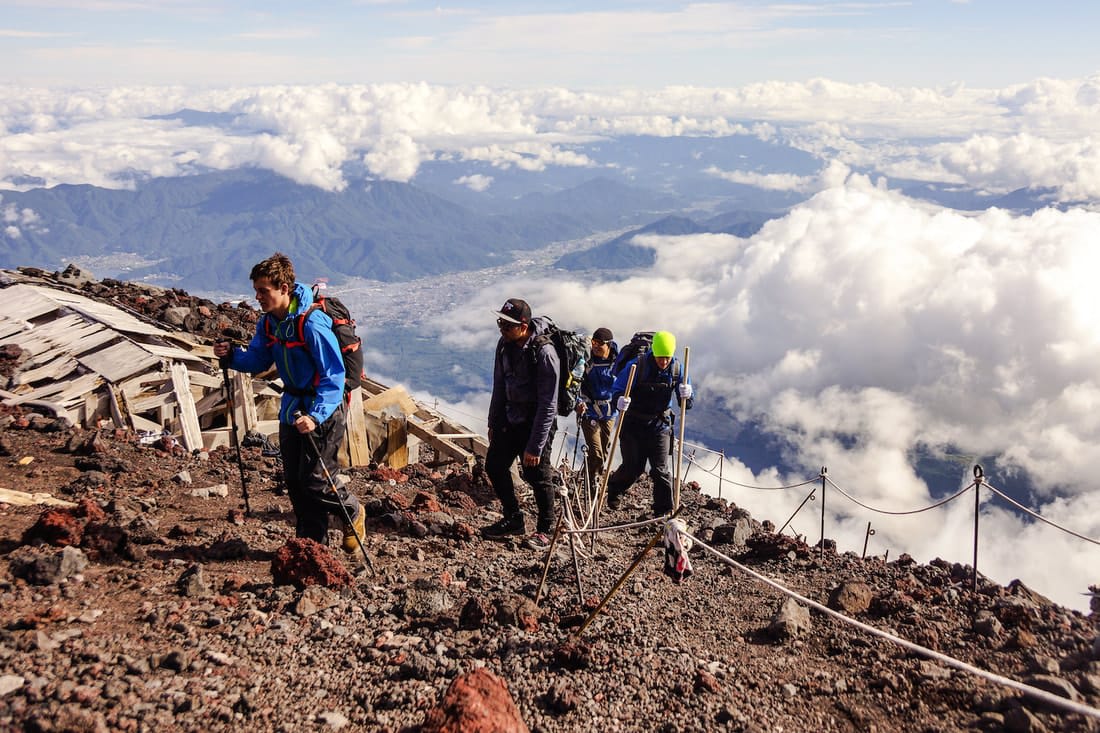
Mount Fuji remains closed to climbers eight months of the year. The official climbing season runs from early July through early September, when mountain huts open, trails receive maintenance, and emergency services operate at full capacity. Outside these dates, snow and ice render the routes dangerous for all but experienced winter mountaineers with technical gear. The Yoshida Trail from Fuji Subaru Line 5th Station offers the most straightforward self-guided route, with clear signage, established rest points every 500 meters of elevation, and the densest concentration of mountain huts for overnight stays or emergency shelter. The trailhead sits at 2,305 meters elevation, leaving 3,471 meters to the summit. Most independent climbers attempting a diy Mt Fuji tour from Tokyo allocate two days: ascending to the 7th or 8th station hut in the afternoon, sleeping briefly, then summiting before dawn to witness goraiko—sunrise from Japan's highest peak—before descending the same day. The Fuji climbing permit system introduced in 2024 requires advance registration during peak periods, particularly weekends in late July and early August when trail congestion reaches unsafe levels. The 4,000 JPY conservation fee applies to all climbers and funds trail maintenance, waste management, and ranger patrols. Climbers receive a wristband at the 5th Station checkpoint as proof of payment. Weather determines success more than fitness. Temperatures at the summit average 5-8°C even in August, with wind chill dropping perceived temperatures below freezing. Afternoon thunderstorms develop rapidly, reducing visibility to under 10 meters and making rocky sections treacherous. The recommended arrival window between 06:00 and 09:00 maximizes stable weather exposure and ensures adequate daylight for descent if choosing a single-day climb rather than an overnight hut stay.
“The official climbing season runs from early July through early September, when mountain huts open, trails receive maintenance, and emergency services operate at full capacity.”
The Fuji Subaru Line 5th Station is located in the Yamanashi Prefecture and serves as the primary access point for visitors. The most direct public transit approach involves combining rail travel with a dedicated mountain bus connection.
JR Chuo Line from Shinjuku Station to Otsuki Station
Fujikyu Railway from Otsuki Station to Fujisan Station or Kawaguchiko Station
Fujikyuko Bus from Kawaguchiko Station to Fuji Subaru Line 5th Station
For the most efficient transit, aim for the best arrival window of 06:00–09:00 to secure clearer mountain views and avoid peak mid-day tourist crowds.
The best arrival window is 06:00–09:00 to secure clearer mountain views before cloud buildup and to avoid peak mid-day tourist crowds.
Cool, 5°C to 15°C; visible peaks. Clear skies are frequent during these months before the humid summer season.
Cool, 3°C to 14°C; stable visibility. Crisp air often provides the most consistent views of the mountain.
—; clearer conditions. Arriving early minimizes congestion from tour groups arriving later in the day.
Verdict: For optimal conditions, plan your arrival between 06:00 and 09:00 during the months of April or October.
The Fuji Subaru Line 5th Station is open to visitors daily throughout the week.
A successful independent climb requires advance planning, proper gear, and attention to seasonal trail conditions.
Everything you need to know about diy mt fuji tour from tokyo
Planning an independent trip involves coordinating train or bus transport from central city hubs to the mountain base. You should verify weather conditions and trail status on the official website before departing on your diy mt fuji tour from tokyo. Travelers often use local bus lines to reach the trailhead from major regional transit points.
The best arrival window for mountain access is between 06:00 and 09:00. Arriving early ensures clearer views before cloud buildup and helps you avoid peak mid-day tourist crowds at the station. This timing is essential for maximizing your enjoyment of the scenery during your Tokyo-to-Fuji outing.
Yes, there is a mandatory hiking fee of 4,000 JPY for mountain access during the official climbing season. This fee supports conservation efforts and trail maintenance for all visitors. Please ensure you have this amount ready when planning your independent visit to the summit trails.
Yes, independent hikers may access the mountain, but they must adhere to all safety regulations and trail guidelines found on the official site. Proper preparation for high-altitude conditions is required for anyone attempting a diy mt fuji tour from tokyo. Ensure you follow all posted signs and respect the alpine environment during your climb.
The official address for the destination is Fuji Subaru Line 5th Station, Narusawa, Minamitsuru District, Yamanashi 401-0320, Japan. You can use this address in mapping applications to find your way from the city. It serves as the primary gateway for many visitors arriving by bus.
The location maintains accessibility throughout the week, with opening hours listed as 00:00–23:59 from Monday through Sunday. While the site is open daily, you should check specific seasonal trail restrictions before finalizing your diy mt fuji tour from tokyo. Access is always subject to local weather conditions and official safety advisories.