10 hr
Mount Fuji Highlights Day Tour from Tokyo
Discover Japan's iconic peak through lakeside vistas, historic villages, and Instagram-famous viewpoints on this full-day adventure.
Reserve
Hand-picked by our editors — only the best 5 experiences from 47 reviewed.
Verified partners for every tour, free cancellation where available, and instant confirmation on every booking.
10 hr
Discover Japan's iconic peak through lakeside vistas, historic villages, and Instagram-famous viewpoints on this full-day adventure.
Reserve
10 hr
Discover Japan's iconic mountain, volcanic valleys, and lakeside shrines on a full-day guided journey.
Reserve
10 hr
Experience Japan's sacred mountain through lakeside vistas, iconic pagodas, and traditional villages
ReservePrices from verified partners. Availability updates in real time at checkout. Free cancellation policies apply where shown.
The landmarks, rooms, and views travelers on this tour remember — all visible on a single visit.
A historic shrine located near the 5th station. It has served pilgrims for centuries before modern tourism began.
This iconic scenic road winds up the mountain. It reaches an elevation of 2,305 meters at the terminal station.
The central hub for all visitors. It serves as the primary meeting point for those on a mt fuji day trip bus tour from tokyo.
A designated viewing area for the peak. On clear days, it provides an unobstructed view of the volcanic summit.
The official start for climbers. It is the location where the 4000 JPY mandatory fee is verified for hikers.
They complement each other; most visitors who do both call the bus tour more convenient, while independent transit is more liberating. Planning a mt fuji day trip bus tour from tokyo ensures a structured experience, whereas public transport offers greater personal freedom.
| Feature | Top pick Bus Tour | Public Transit |
|---|---|---|
Booking complexity |
Single online booking | |
Transit flexibility |
Fixed departure times | |
Guided insights |
Live local commentary | |
Fixed itineraries |
Strict schedule maintained | |
Cost-efficiency |
All-inclusive pricing | |
Language support |
Multilingual staff available | |
| See tickets → |
Verdict: Choose a mt fuji day trip bus tour from tokyo for seamless logistics or opt for public transit if you prefer setting your own pace and exploring Yamanashi independently.
Choose your ticket, select your date, and reserve in under two minutes. Secure checkout handled by our verified partner.
Instant confirmation by email, with a mobile voucher you can save offline. No printing, no queuing at a collection desk.
Arrive at the entrance, show your voucher on your phone, and walk in. Most tickets include priority or skip-the-line access.
Practical details for your visit straight from our verified partners — hours, access, rules, and how to get there.
1-1-3 Nishi-Shinjuku
Major city transport hub
Take the Fuji Excursion train to Kawaguchiko Station and transfer to a local bus.
Drive via Chuo Expressway to Fuji Subaru Line toll gate.
Layered clothing is essential for a mt fuji day trip bus tour from tokyo due to rapid temperature drops at the 5th station. Wear sturdy walking shoes as terrain is uneven.
Keep luggage compact for bus transport as storage space is restricted. Security checks may occur at the start of your mt fuji day trip bus tour from tokyo.
Photography is permitted at the 5th station. Capture the volcanic landscape, but respect restricted areas during your mt fuji day trip bus tour from tokyo.
While the 5th station square is paved, steep inclines limit wheelchair access. Mt fuji day trip bus tour from tokyo operators provide varying levels of mobility support.
Mobile reception is generally reliable at the 5th station. Use your device to track your mt fuji day trip bus tour from tokyo schedule.
Families find the 5th station accessible, though altitude may affect younger children. Ensure your mt fuji day trip bus tour from tokyo itinerary includes sufficient breaks.
Several shops serve local snacks and hot meals at the station. Bring water to stay hydrated during your mt fuji day trip bus tour from tokyo.
Pets are generally not allowed inside enclosed shuttle transport. Verify pet policies before booking a mt fuji day trip bus tour from tokyo.
The 5th station is 2,305 meters above sea level. Acclimatize briefly upon arrival for your mt fuji day trip bus tour from tokyo.
Best time to go, insider tips, nearby landmarks, and the cancellation fine print — flip through to skim what matters to you.
How crowds, weather, and events shift across the year.
Clearer skies offer distinct summit views. Temperatures are cool and manageable for short walks.
Peak season for climbing and lush greenery. Expect heavy crowds on any mt fuji day trip bus tour from tokyo.
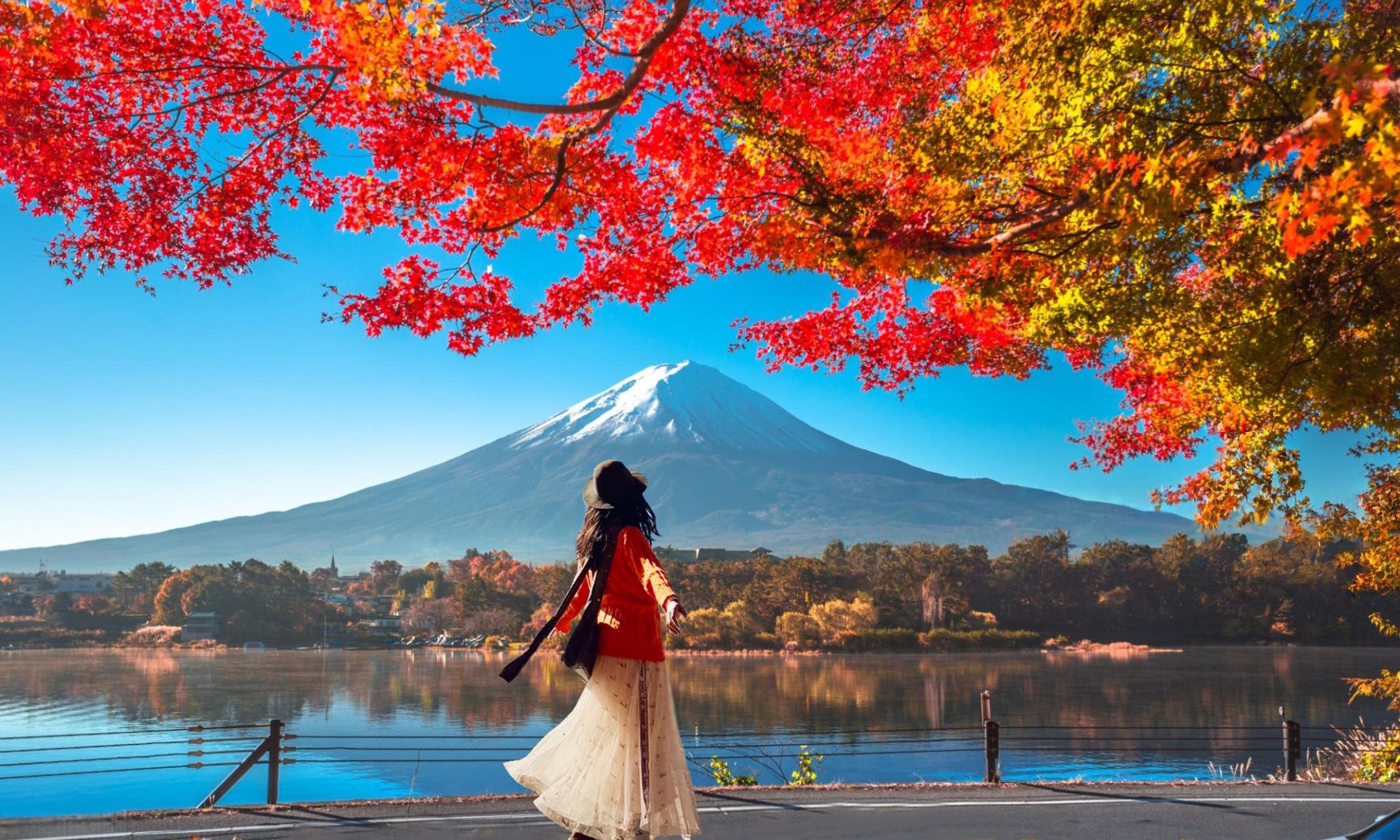
Vibrant foliage surrounds the base. Ideal for photography as humidity decreases during this season.
Deep snow often limits road access. Essential to check weather updates before planning a mt fuji day trip bus tour from tokyo.
Small details that turn a good visit into a great one.
Arrive between 07:00 and 10:00 to escape heavy bus crowds. Morning light is also ideal for photos.
Drink water frequently to prevent altitude-related headaches. Low humidity at this elevation can cause rapid dehydration.
Webcams at the 5th station provide real-time visibility updates. Visibility changes quickly throughout the day.
Follow all posted signs regarding climbing restrictions. Climbing past the 5th station requires a 4000 JPY mandatory fee.
Many small vendors at the 5th station do not accept credit cards. Always carry enough Japanese Yen for small purchases.
Non-bookable sights within a short walk — free to visit, easy to pair.
Historic site located near the station entrance. It offers a glimpse into traditional mountain worship.
Flexible, no hidden fees.
Full refunds are provided for a mt fuji day trip bus tour from tokyo if canceled at least 24 hours before departure. Cancellations made within this window are non-refundable, excluding the mandatory 4000 JPY climbing fee if applicable.
Hand-picked options within walking distance — pick a district for vibe, or a specific hotel for convenience.
Traditional resort with hot spring access. Located in nearby Fujiyoshida.
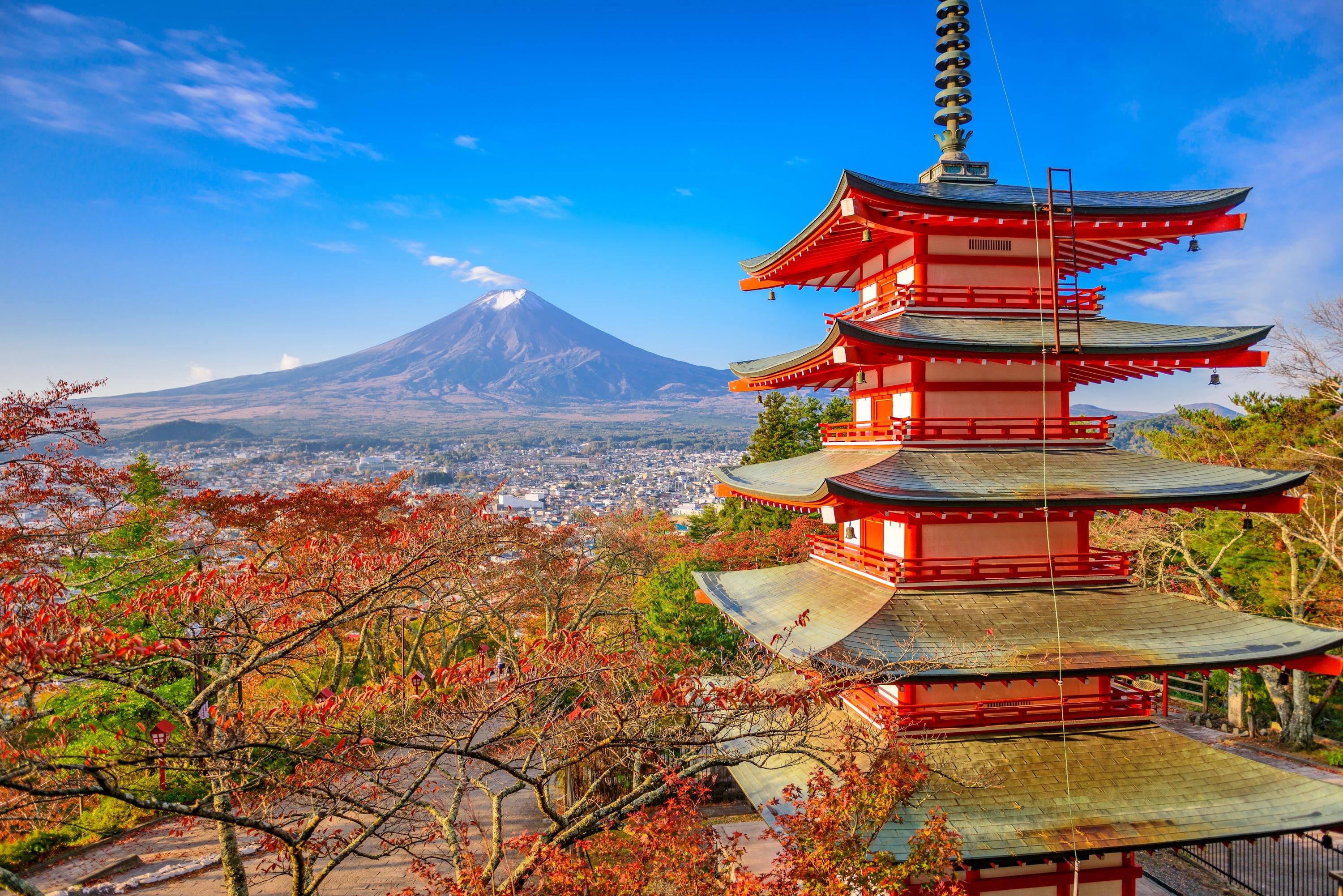
Mount Fuji's perfect cone rises 3,776 metres above sea level, yet ninety percent of its 300,000 annual climbers never venture beyond the Fuji Subaru Line 5th Station at 2,305 metres. That threshold, carved into volcanic ash and basalt in 1964, remains the highest point reachable by paved road and the departure point for summit attempts during the July–September climbing window. The station's observatory deck frames unobstructed views across Yamanashi Prefecture's northern forests, where five Fuji lakes — Kawaguchi, Yamanaka, Sai, Shōji, Motosu — occupy collapse calderas left by ancient eruptions. The mountain's last major eruption in 1707 blanketed Edo, present-day Tokyo, in ten centimetres of ash and reshaped the approach routes still used by guided bus tours today. Mount Fuji's silhouette has anchored Japanese spiritual practice since the eighth century, when Shinto pilgrims first documented ascents to worship the volcano's kami. Formal climbing routes, established during the Edo period, divided the mountain into ten stations, with the 5th marking the traditional boundary between sacred and secular ground. UNESCO inscribed Fuji as a Cultural Landscape in 2013, citing its influence on ukiyo-e woodblock prints, poetry, and pilgrimage architecture. The designation protects the mountain's visual integrity and the shrine networks that ring its base, including Fujisan Hongū Sengen Taisha, the head shrine for 1,300 Sengen temples nationwide. Today's mt fuji day trip bus tour from tokyo itineraries converge on a corridor that pairs the 5th Station with Hakone's volcanic geography. Most operators route through the Chūō Expressway to Yamanashi's north face, allocating forty to sixty minutes at the observation platform before descending to Lake Ashi, a crater lake formed 3,000 years ago. The Hakone Ropeway spans Ōwakudani's active sulphur vents, where steam plumes rise from fissures opened by the mountain's last phreatic eruption in 1170. Autumn's koyo foliage season, peaking in late October, saturates the Hakone hills in crimson and gold, while winter's clear air delivers the highest probability of unobstructed Fuji views. Operators typically depart Shinjuku or Tokyo Station between 07:00 and 08:00, returning by 19:00 after a ten-to-twelve-hour circuit. The 5th Station's souvenir halls stock lava-fragment keychains, altitude-stamped walking sticks, and the oxygen canisters climbers rely on above 3,000 metres. Outside the climbing season, snow closes the Subaru Line from November through April, forcing winter mt fuji day trip bus tour from tokyo tours to substitute lower viewpoints like Arakurayama Sengen Park, where a five-storey pagoda foregrounds the peak. Morning departures exploit the mountain's tendency to self-obscure by midday, when orographic clouds cap the summit and erase the horizon. The conservation fee of 4,000 yen applies only to climbers ascending beyond the 5th Station; day visitors exploring the station's observation terraces and shrine precincts enter without charge.

"Mount Fuji's perfect cone rises 3,776 metres above sea level, yet ninety percent of its 300,000 annual climbers never venture beyond the 5th Station."
A step-by-step walkthrough of the visit — what you'll see, how long each stage takes, and the details that matter.
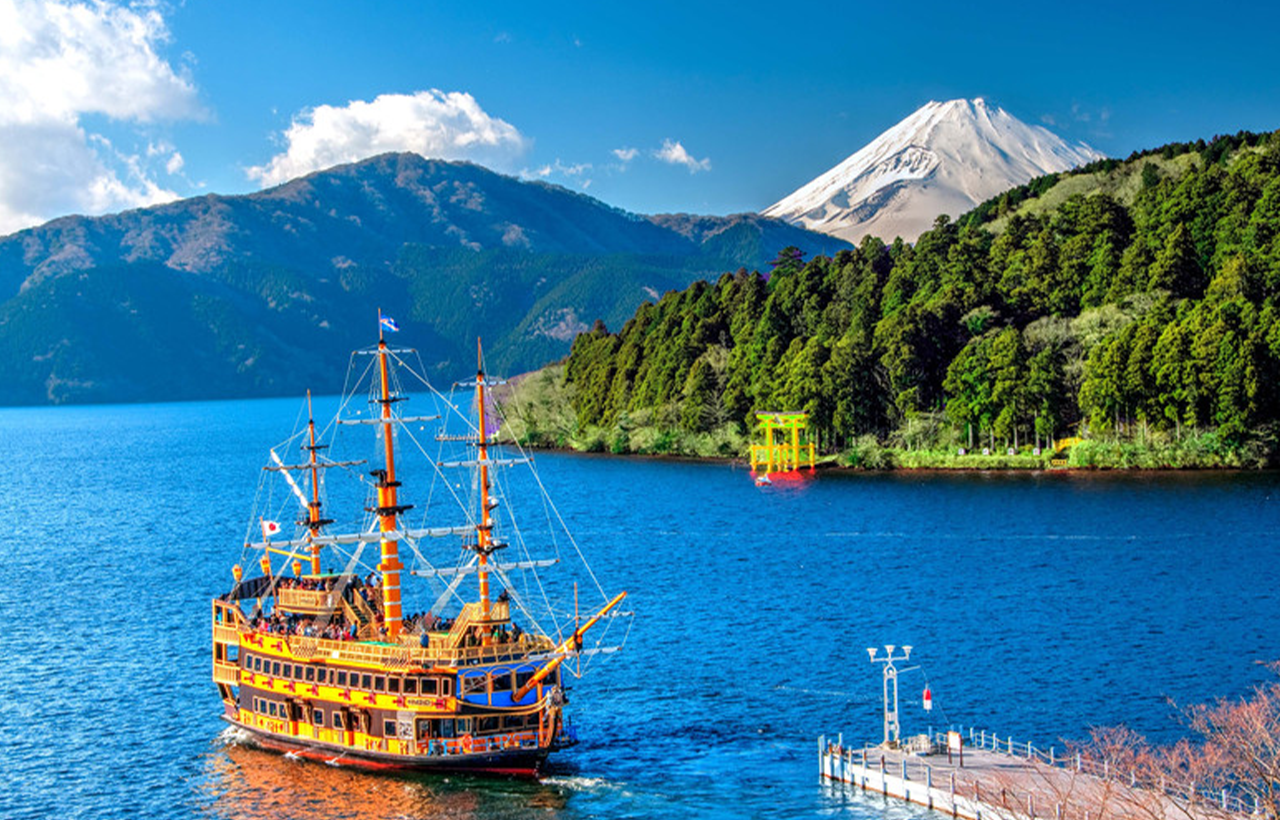
You board the coach at Shinjuku's west exit before 08:00, settling into a reclining seat as the guide distributes route maps and weather updates. The Chūō Expressway cuts west through Tama's suburbs, trading glass towers for tea fields as the bus climbs toward Yamanashi Prefecture. Two hours in, the road curves onto the Fuji Subaru Line, a winding ascent through larch and hemlock that opens suddenly onto the 5th Station's gravel plaza at 2,305 metres. You step into air ten degrees cooler than Tokyo's, the summit's snowcap filling the northern sky. The observation deck extends over a basalt shelf, offering sightlines across the five Fuji lakes and the ridgeline where climbers queue during summer. You walk the perimeter, pausing at the shrine torii that marks the traditional pilgrimage threshold, before the guide signals a forty-minute stop for photographs and the gift hall's lava souvenirs. Descending, the bus winds through Hakone's switchbacks to Lake Ashi, where a replica pirate galleon ferries passengers across water the colour of polished jade. The Hakone Ropeway follows, its gondola rising over Ōwakudani's sulphur vents, steam hissing from fissures in the slope below. You return to Shinjuku as dusk settles, the mountain's outline fading behind the city's neon grid.
The Fuji Subaru Line 5th Station is open 00:00–23:59 daily. Most tours operate within these daylight hours.
Entry to the 5th station is 0 JPY for sightseeing. Climbing past this point requires a 4000 JPY mandatory fee.
For the best experience, arrive between 07:00 and 10:00 to avoid heavy tour bus crowds and enjoy clearer weather.
Yes, children are welcome on most tours. Check with your specific operator regarding safety equipment for infants.
Cancellations are accepted up to 24 hours before your trip for a full refund. Contact your operator for specific refund processes.
Yes, but you must pay the 4000 JPY mandatory fee if you intend to climb past the 5th station.
Yes, several shops at the 5th station offer hot meals and snacks. It is recommended to carry some water with you.
Most tours depart from central hubs like Shinjuku. Detailed instructions are provided in your booking confirmation.
Yes, photography is permitted at the 5th station. Please be mindful of other visitors while taking photos.
Komitake Shrine is a short walk from the 5th station. It is a historic site worth visiting while at Mount Fuji.